The Identity Architecture Model
A framework for understanding the structure beneath how leaders work and perform
Many leaders try to change behavior when something in their work or leadership stops feeling sustainable.
They adjust routines.
They apply more discipline.
They attempt to manage their time or energy differently.
But behavior is rarely the root of the pattern.
The Identity Architecture Model explores the deeper internal structure that shapes how leaders think, respond, and perform over time.
Understanding that structure often becomes the first step toward sustainable leadership change.
Core Insight
Most leadership advice focuses on behavior.
But behavior is only the visible layer of performance.
Beneath behavior is a deeper internal architecture made up of beliefs and internal standards that quietly shape how leaders respond to pressure, responsibility, and success.
When those structures remain unchanged, behavioral adjustments rarely last.
Sustainable leadership change begins at the level of identity architecture.
The Identity Architecture Model
Outcomes
Results and performance
↑
Behaviors
What leaders consistently do
↑
Standards
The internal rules leaders hold themselves accountable to.
↑
Beliefs
What leaders believe about success, pressure, responsibility, and worth.
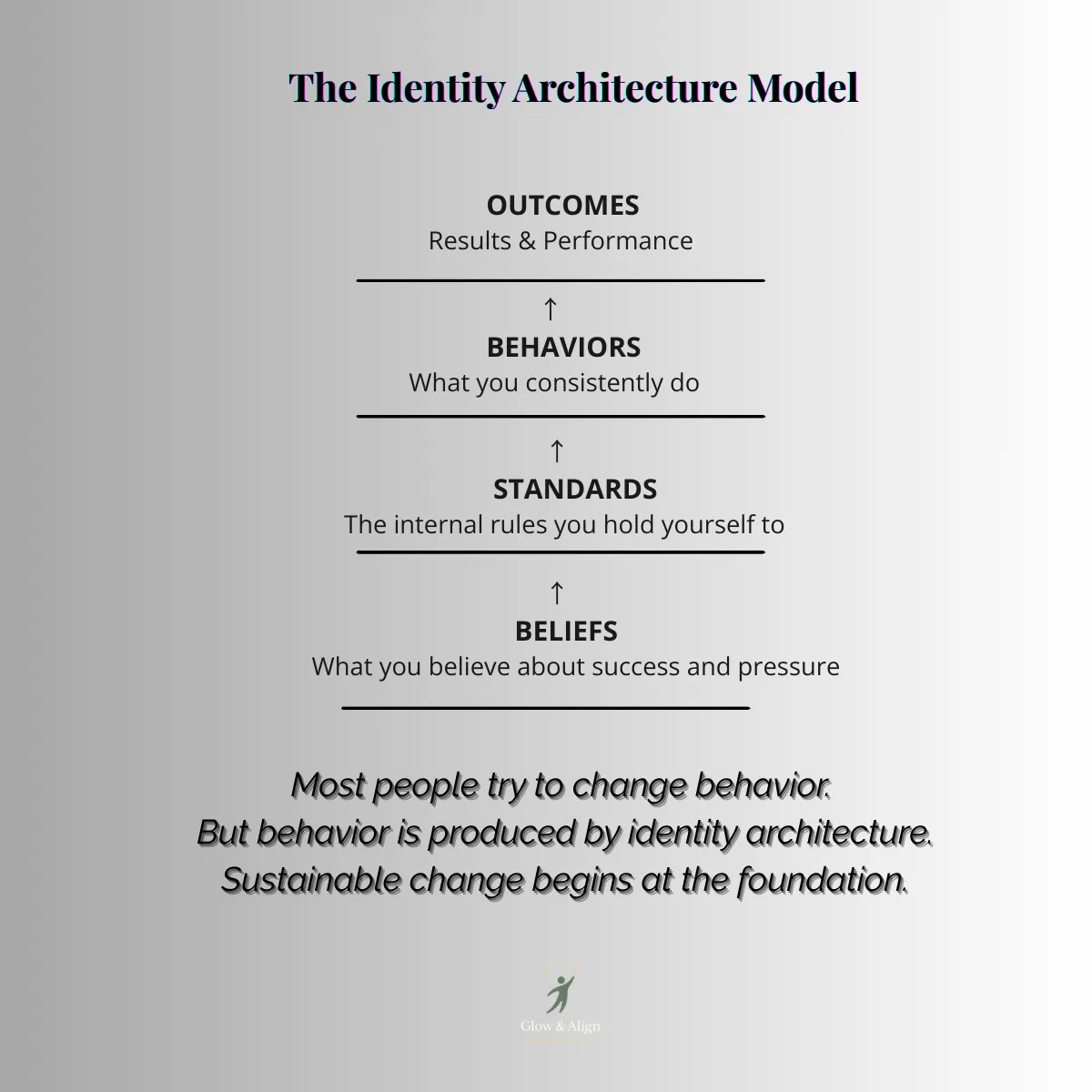
Most attempts at change focus on behavior.
But behavior is simply the visible expression of deeper identity structures.
When the architecture beneath performance changes,
behavior naturally follows.
The Four Layers of Identity Architecture
Beliefs | Standards | Behaviors | Outcomes
Foundation → Internal Rules → Actions → Results
Sustainable leadership change begins at the foundation.
Beliefs
Beliefs form the foundation of identity architecture.
They shape how leaders interpret responsibility, pressure, success, and self-worth.
Many of these beliefs form early in a leader's career, and often develop during periods of rapid growth or high expectations.
Over time, they quietly influence how leaders approach decisions, risk, and responsibilities.
Standards
Standards are the internal rules leaders hold themselves to.
They determine how much pressure a leader applies to themselves, how they measure performance, and what they believe is required to succeed.
These standards often evolve from earlier beliefs and can become deeply ingrained over time.
Behaviors
Behaviors are the visible actions that emerge from beliefs and standards.
Most leadership development focuses here - productivity, habits, routines, and performance strategies.
But behaviors often reflect deeper structures rather than operating independently.
Outcomes
Outcomes are the results produced by repeated behaviors over time.
Leadership effectiveness, burnout, satisfaction, and long-term sustainability often reflect the deeper architecture beneath them.
When outcomes begin to shift, it is often a signal that deeper structures may be ready for examination.
Why Behavior Change Often Fails
Many personal and leadership development focuses on modifying behavior.
Leaders adjust routines.
They adopt new habits.
They apply more discipline or productivity strategies.
While these changes can produce temporary improvements, they often fail to hold when the underlying identity structure remains unchanged.
The Identity Architecture Model suggests that lasting change occurs when leaders explore the beliefs and internal standards shaping their behavior.
Sustainable leadership change rarely begins with behavior.
It begins by examining the architecture beneath it.
When those deeper structures shift, behavior and outcomes naturally follow.
How Leaders Often Encounter This Model
The Identity Architecture Model often becomes most visible during moments of leadership transition.
For example:
• When success begins to feel increasingly difficult to sustain.
• When pressure patterns that once produced results begin creating exhaustion.
• When leadership responsibilities evolve faster than the identity that built earlier success.
• When pushing harder no longer produces clarity
These moments often signal that something deeper than behavior may be shifting.
Exploring Your Own Identity Architecture
Understanding identity architecture begins with awareness.
Exploring the beliefs and internal standards shaping your leadership can reveal why certain patterns persist - and whether they still support the season ahead.
For leaders beginning that reflection, the Identity Shift Journal offers a short guided exploration.
The Identity Shift Journal helps you begin examining the beliefs and internal standards shaping how you feel today.
Leadership transformation rarely begins with a strategy.
It begins when a leader recognizes that the identity structure that once created success may no longer support the next stage of leadership.
At that point, the work shifts from pushing harder to redesigning the architecture beneath the role.
Framework developed by Mounir Benmoha
Glow & Align Coaching 2025 | Privacy Policy | Terms & Conditions